
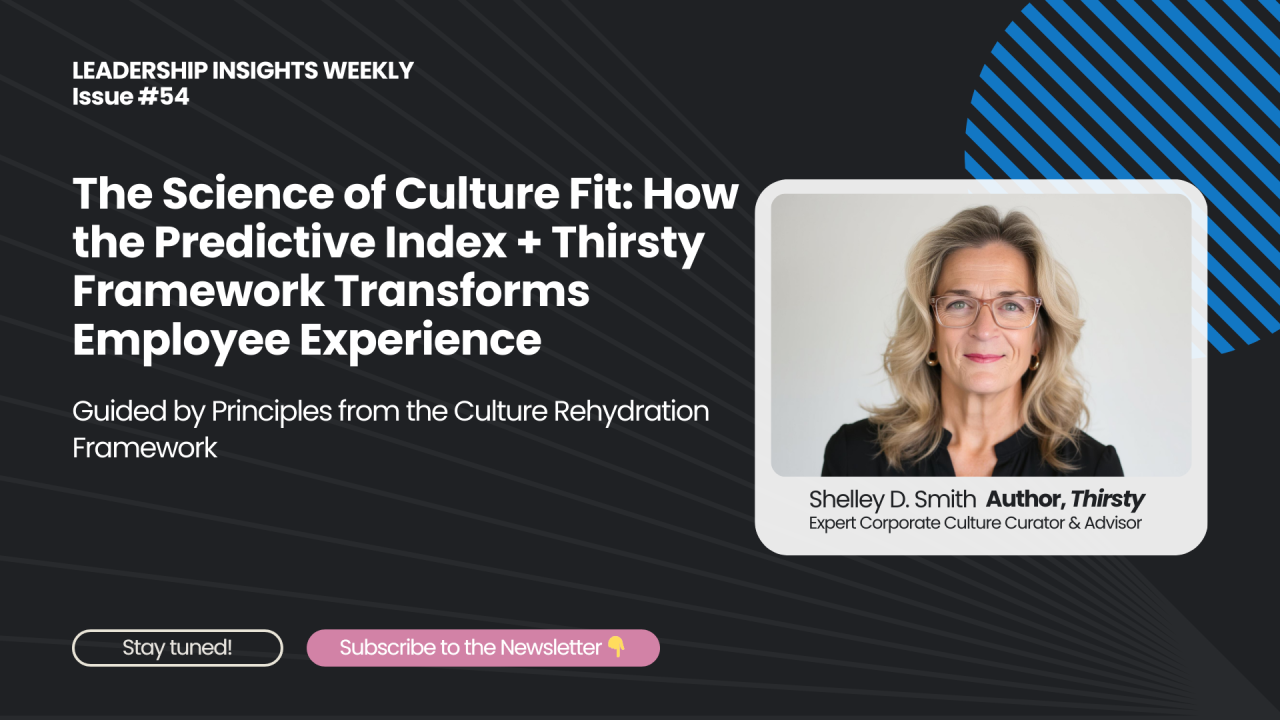
Employee experience doesn’t start after hiring — it starts the moment someone considers working for you. Learn how behavioral science transforms hiring, onboarding, and long-term retention.

With talent pools literally shrinking - birth rates at historic lows and job creation falling short of projections - every hire matters more, every retention failure costs more, and every cultural misalignment becomes exponentially expensive.
Most organizations think employee experience starts after someone is hired.
But the truth is, employee experience begins the moment someone considers working for you.
In a world where human capital is increasingly scarce, the old playbook of “post a job and see who applies” is dead. The new reality demands precision, and behavioral science provides it.
This isn’t just about competitive advantage anymore. It’s about organizational survival.
I got a text from a client at a major health system recently: “Last night I taught a class on how to increase employee experience. Used your book as a ‘must have’ as they are building culture.”
That framing — building culture, not managing it — captures the shift.
In a world where there are simply fewer people to work with, you can’t afford to waste a single hire on cultural misalignment.
Here’s what most organizations get wrong about culture measurement: they measure satisfaction and engagement after the fact, when the signals that predict cultural health are available much earlier.
Traditional hiring asks: “Can this person do the job?”
Behavioral culture fit asks: “Will this person thrive in our culture while doing this job?”
When you combine behavioral assessment tools with the observational intelligence that detects what no algorithm can, you don’t just hire better.
You create environments where every person actually thrives.
The science measures four core behavioral drives, dominance, extraversion, patience, and formality — and maps them against role requirements and team dynamics.
This isn’t about hiring people who think alike. It’s about understanding how behavioral patterns interact within your cultural ecosystem.
Before behavioral integration: You hire based on skills and hope for culture fit.
Onboarding feels generic. New hires struggle to find their rhythm. Six-month turnover becomes your biggest expense.
After behavioral integration: You hire for both capability and behavioral alignment.
You predict cultural success before someone starts. You maximize every hire’s potential from day one.
The cultural impact is immediate: when you hire people whose natural behavioral patterns align with your culture, they don’t just survive your environment, they energize it.
Traditional onboarding: here’s your laptop, here’s your handbook, good luck.
Behaviorally-informed onboarding: here’s how you naturally operate, here’s how our culture supports that, here’s how to leverage your strengths from day one.
In practice, this means behavioral blueprints so new hires understand their natural drives, customized integration by personality style, strength-based role clarity, and cultural navigation tools.
New hires hit their stride in weeks instead of months.
They feel seen, understood, and positioned for success.
Which is exactly the feeling of being valued that prevents early-stage dehydration.
Hiring well and onboarding effectively isn’t enough.
People grow, roles evolve, teams shift. What worked in month one might create friction in month twelve.
This is where behavioral science becomes your long-term culture maintenance tool.
Career paths aligned with natural behavioral patterns.
Team dynamics optimization through understanding how styles complement each other.
Role evolution support that recognizes when someone’s outgrown their current fit.
When behavioral intelligence is integrated throughout the employee lifecycle, retention becomes competitive advantage, performance maximizes, culture becomes magnetic, and engagement sustains.
This is the predictive capability that traditional “people problem” thinking misses entirely.
When you understand behavioral patterns, you can predict cultural friction before it happens, and intervene before it becomes a resignation letter.
What is the future of culture measurement?
The future combines behavioral science with ongoing observational intelligence - integrating assessment data across the entire employee lifecycle with real-time sentiment analysis and human observation. The most effective approach blends objective behavioral data with subjective human intelligence for detecting what algorithms can’t.
How do you measure culture fit without bias?
Objective behavioral assessment tools evaluate underlying drives — dominance, extraversion, patience, formality - rather than subjective impressions. Culture fit isn’t about hiring people who look or think alike - it’s ensuring behavioral patterns complement team needs.
What are predictive culture metrics?
Forward-looking indicators forecasting health before traditional lagging metrics: behavioral alignment scores, onboarding integration speed, voluntary collaboration rates, pronoun patterns, question quality in meetings, and predicted vs. actual performance gaps.
How does behavioral assessment improve retention?
Alignment at three stages: hiring (roles matching natural drives), onboarding (customized by behavioral style), and development (career paths energizing rather than exhausting). People working in behavioral alignment don’t just survive — they energize culture.
Explore articles, case studies, and resources - crafted to keep you ahead.