
The largest oil supply disruption on record. Tariff chaos. And somewhere, someone just said 'we're past the worst of it.' Here's how to use your Predictive Index data to build a 3-quarter people plan that navigates the next 9 months with behavioral intelligence instead of panic.


Happy April Fools' Day, friends.
I considered pranking you today. Something like "tariffs are resolved, oil prices are stable, and your entire leadership team is perfectly aligned with their roles."
But the world already got to the punchline before I did.
We're looking at the largest oil supply disruption on record. Tariff volatility that changes faster than the weather app you stopped trusting. Shipping routes that now require an actual geography degree to follow. And somewhere, in a conference room near you, someone just said "I think we're past the worst of it."
Bless their heart.
Here's what I actually want to talk about. Not the chaos itself, but how you use what you already have to navigate it smarter than everyone else. Specifically, your Predictive Index data. Because the organizations that are going to come out of the next three quarters ahead of the curve aren't the ones who panicked the most. They're the ones who had a real people plan built on real behavioral intelligence.
Let's break it down.
The first thing to do right now is build a headcount and skills map. But here's where most leaders stop short. They look at job titles and performance scores. That's not enough.
Use your PI job targets to audit who is actually in the right seat for what this environment demands. The criteria for a great procurement lead in a stable market looks very different from what you need when you're renegotiating supplier contracts every other week. A stable, process-oriented profile who thrived when everything was predictable might be genuinely struggling right now, while your more assertive, risk-tolerant profile in the same department is quietly ready to go.
You need to know the difference. PI tells you.
From there, run your scenario planning. Best case, middle case, and "well, that happened" case. For each trigger point, whether it's an oil price threshold, a backlog change, or a cash flow shift, have a pre-agreed people action ready. You don't want to be making these calls at 11 PM on a Tuesday.

This is where most organizations lose ground. They wait for the pressure to force a decision instead of using behavioral data to make smart lateral moves before things get critical.
That precise, process-driven production scheduler who's feeling underutilized as volumes shift? PI might show you they're a natural fit for quality or inventory management. That's institutional knowledge preserved, not lost.
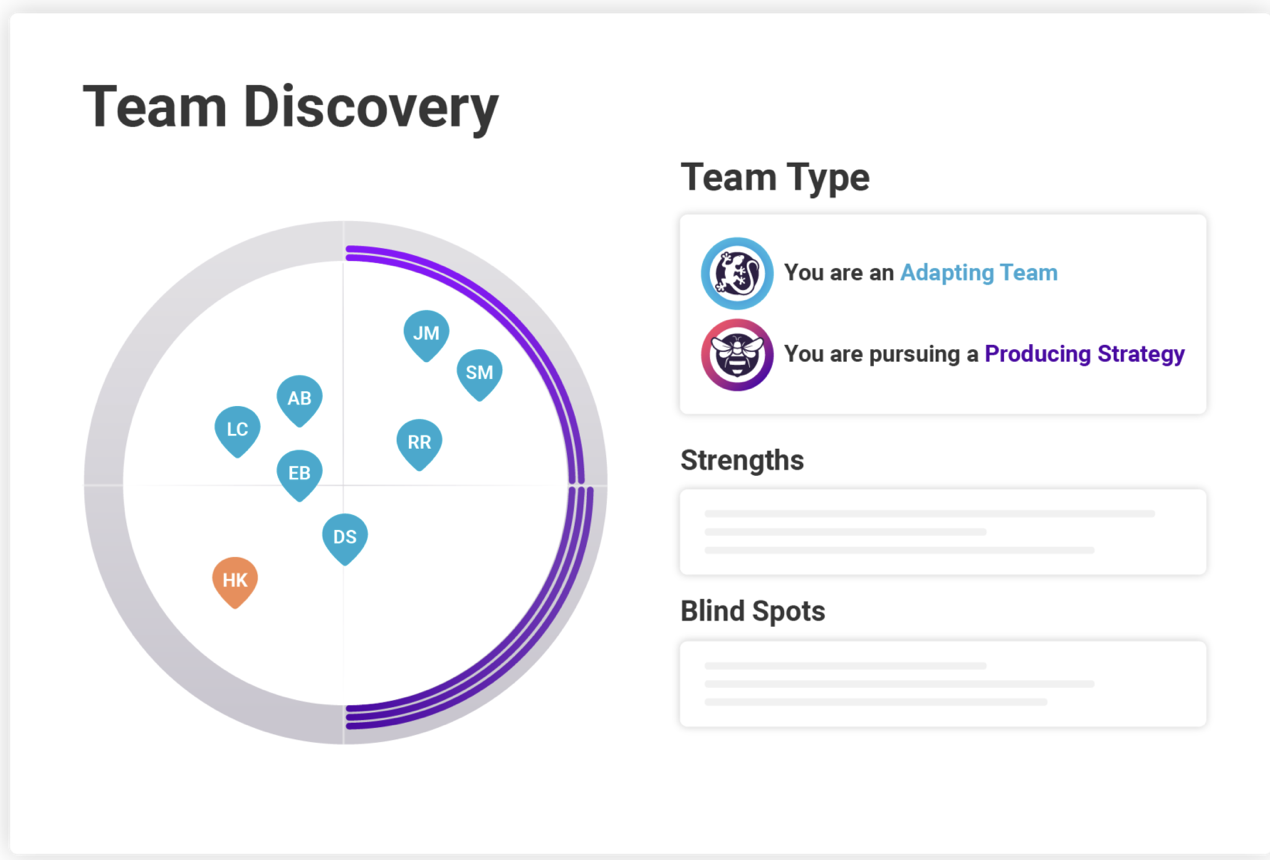
Same goes for your leadership bench. Pull up your team work style maps and ask yourself who in your leadership layer actually thrives when routines dissolve and who needs stability to function. Because your high-formality, structure-dependent leaders are going to need different coaching right now than your change-tolerant, ambiguity-comfortable ones. Coach them differently. PI shows you how.

Shorten your performance cycles. Clarify the trade-offs. And for everyone's sanity, tell your teams what you're stopping just as clearly as what you're starting.
Not everything gets frozen. This is where smart organizations separate themselves.
Ring-fence the roles tied to strategic customers, supply chain resilience, and efficiency work. Keep building pipeline for hard-to-fill roles even when you're not actively hiring. When the rebound comes, you do not want to be scrambling.
And here's the PI piece most people miss in this phase. Use PI to design your "tiger teams." If you're building a cross-functional group to manage shortages, customer commitments, or cost reduction, you want that team intentionally balanced. High dominance profiles for negotiation. High formality profiles for compliance. High extraversion profiles for client communication. You're not throwing people together and hoping. You're building with intention.
Your people are filling every silence you leave with their own worst-case scenario.
Different behavioral profiles need different things from you right now. Some need granular detail and certainty. Some need big-picture context and autonomy. Some need to be in the room. Some need to be told it's okay to close the door and focus.
PI segmentation gives you that. Build simple manager toolkits. "If your team skews high formality, communicate changes this way. If your team skews high extraversion, do it this way." It takes the guesswork out of one of the hardest parts of leadership right now.
Three questions. Answer honestly.
1. Have you re-run PI job targets for your most critical roles against what those roles actually need right now, not what they needed 18 months ago?
2. Do you know which leaders on your bench will steady the ship under ambiguity and which ones will quietly start updating their LinkedIn?
3. Is your 3-quarter people plan built with behavioral data, or is it still just a headcount spreadsheet?
The world is going to stay interesting for a while. Your culture doesn't have to dehydrate because of it.
If you're ready to build your 3-quarter people plan with PI at the center before Q2 gets any wilder, let's lock it in together.
PI provides behavioral and cognitive data that shows how each person on your team is naturally wired: what energizes them, what drains them, and how they respond to change and ambiguity. During volatility, this data lets you make smarter lateral moves, build intentionally balanced crisis teams, and coach different leadership profiles in the ways they actually need, rather than applying a one-size-fits-all approach to a workforce full of different behavioral drives.
A 3-quarter people plan maps your workforce decisions across the next 9 months with trigger-based actions for best, middle, and worst-case scenarios. Unlike a static headcount spreadsheet, it uses behavioral data to determine who is in the right seat for current conditions, where smart lateral moves preserve institutional knowledge, and which roles need to be ring-fenced for strategic value. It prevents reactive, 11 PM decision-making when conditions shift.
Re-run PI job targets against what each critical role actually demands in the current environment, not what it needed 18 months ago. A stable, process-oriented profile who thrived in predictable conditions may be struggling now, while a more assertive, risk-tolerant profile in the same department is ready to step up. PI surfaces these mismatches before they become performance crises.
Tiger teams are cross-functional groups assembled to tackle specific challenges like supply shortages, customer commitments, or cost reduction. PI helps design these teams with intentional behavioral balance: high dominance profiles for negotiation, high formality profiles for compliance and process, and high extraversion profiles for client-facing communication. The difference between a team thrown together and a team built with intention shows up in speed, execution, and results.
Different behavioral profiles need different communication approaches. People who score high on formality need granular detail and certainty. Those high on extraversion need to be in the room and part of the conversation. Those high on patience may need reassurance that stability is the goal. PI segmentation lets managers build simple toolkits for communicating change in ways that land with each profile type, instead of leaving silence that people fill with worst-case scenarios.
Explore articles, case studies, and resources - crafted to keep you ahead.