
When 2026 graduates booed AI at commencement ceremonies, they exposed something deeper than generational impatience. Culture expert Shelley Smith connects the backlash to cultural dehydration and explains what HR leaders should do before it reaches their own organizations.

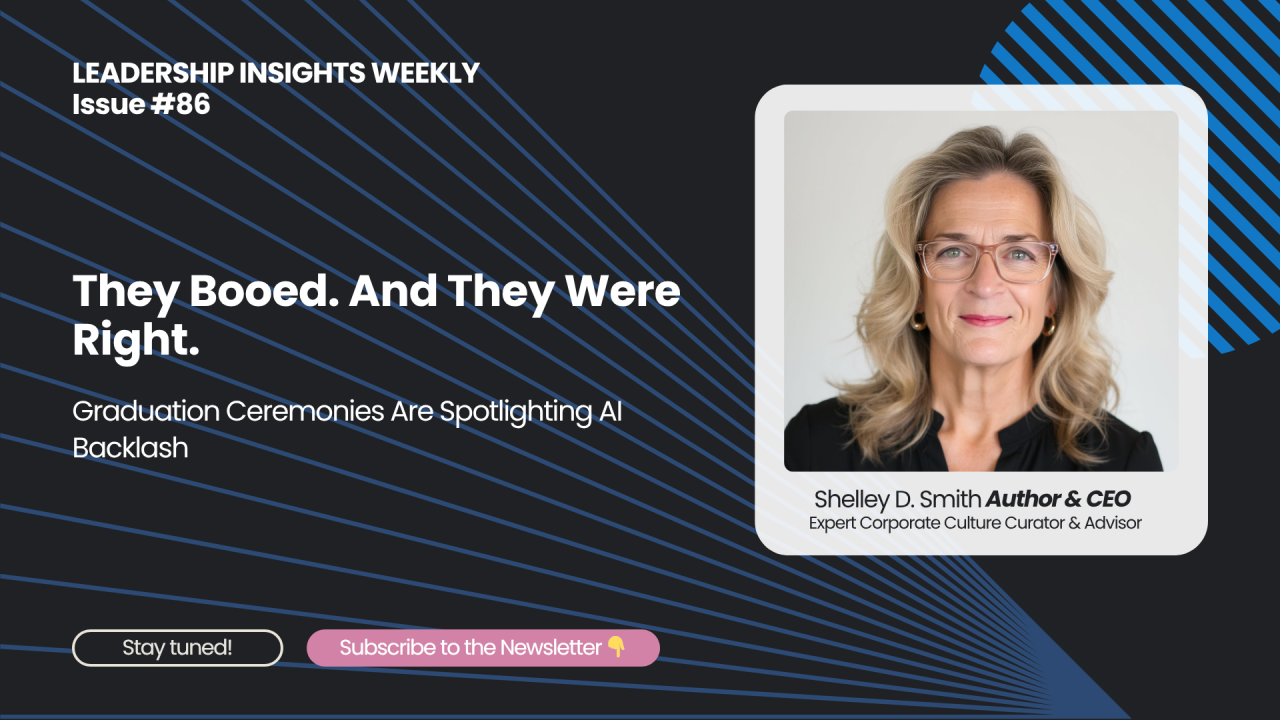
Something happened at college graduation ceremonies this spring that I cannot stop thinking about.
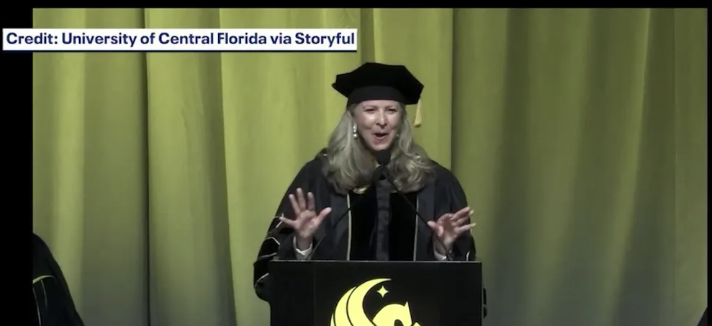
At the University of Arizona, the University of Central Florida, Middle Tennessee State University, and Glendale Community College, newly minted graduates did something we rarely see at formal ceremonies.
They booed.
Not because the speeches were boring. Not because the WiFi was down.
They booed because speaker after speaker brought up artificial intelligence, and these young people, dressed in their caps and gowns, on the most hopeful day of their academic lives, decided they had had enough.
The easy take is to dismiss this as generational impatience.
But I think that would be a mistake. A serious one.
After more than 35 years working inside organizations, watching the same patterns cycle through different decades with different language, I can tell you this:
When a generation entering the workforce pushes back this visibly, it is not noise. It is a signal. And the leaders who ignore it will pay for it in culture long before they see it in their metrics.
Here is what those students understand that many leaders in boardrooms across the country do not.
They are graduating into the most significant period of workplace transformation in the last 25 years. Arguably since electricity rewired how humans work.
Most people who are already established in their careers see AI as opportunity. More efficiency. More output. A competitive edge.
And they are right.
But the generation walking across that stage? They see something different.
They see the entry-level jobs that historically served as career on-ramps. The roles where you learn by doing, make mistakes in low-stakes environments, build the foundational skills that become the bedrock of a career.
Disappearing or being automated before they ever had a chance to do them.
Both perspectives are correct. And if you are leading people right now, you need to hold both truths at the same time.
Who actually benefits from AI? When an organization replaces an entry-level analyst with an AI tool, the cost savings appear on a spreadsheet.
But the cost of a generation that never develops critical thinking through real work? That does not show up on a dashboard.
What happens to critical thinking when we skip the struggle? There is a reason we do not hand new drivers the keys to an autonomous vehicle and call them experienced.
Experience requires friction. AI, used poorly, removes the friction, and with it, the learning.
And then there is the environmental reality no one wants to name out loud.
AI is an energy-hungry industry, expanding rapidly at a moment when geopolitical instability is already putting pressure on global energy systems.
We are not making cost-free decisions when we scale this technology. Someone and something is paying that bill.

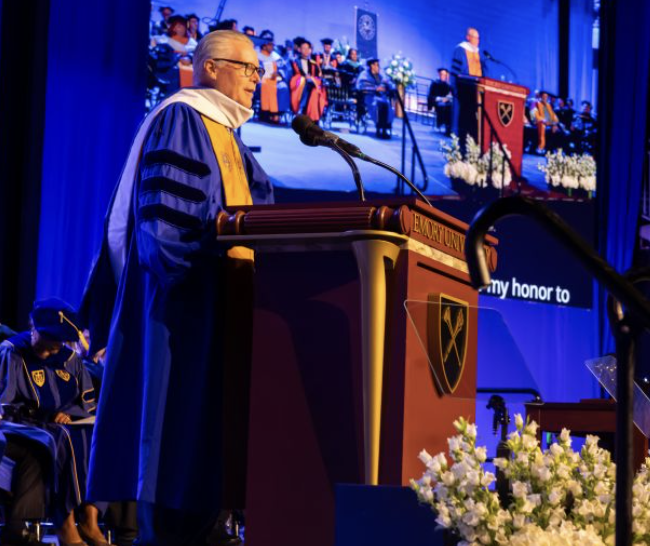
Delta Airlines CEO Ed Bastian gave a commencement address at Emory this same season and said something that stopped the room.
"You want to hear from me, not some algorithm of me."
The place erupted. Loud applause from the same generation that was booing other speakers.
That moment tells you everything.
It was not that these graduates are anti-technology. They are anti-erasure. T
hey want to know that the humans leading them are actually present, that there is a real person with real judgment and real accountability on the other end of the decisions that will shape their careers.
And here is what leaders need to pay attention to. Bastian did not just get applause. He walked away with a marketplace perception win.
In a season when executives were getting booed off podiums, he read the room, and his brand is better for it.
That is not a coincidence. That is what happens when leaders demonstrate they understand what their future workforce actually needs.
I have been saying a version of this for years.
Cultural dehydration, the slow erosion of human connection in our organizations, does not show up in your metrics until it is a crisis.
AI, deployed as a perceived cost-saving tool rather than as a genuine enhancement of human capability, is one of the fastest ways to accelerate that dehydration.
I have watched this pattern before. In the nineties it was re-engineering and empowerment. In the 2000s it was digital transformation and hybrid work.
Now it is AI. Different pieces, same patterns.
The technology changes, but the fundamental leadership mistake stays the same: chasing the tool instead of tending the people the tool is supposed to serve.
We will miss real talent chasing the illusion of efficiency.
That is not a technology problem. It is a leadership problem.
Those graduates were not being dramatic. They were being honest in a way that most organizations punish once people become employees.
They were asking: Where do I fit in this future you are building?
Does my judgment matter?
Is there still a place for what I worked four years to learn?
Those are not resistant questions. They are the exact questions your best people are asking right now, just more quietly.
Your job as a leader is not to convince people that AI is fine.
It is to build an environment where humans and technology are used intentionally. Where the tools amplify talent rather than replace it.
Where the entry-level hire still gets a chance to become the seasoned executive. Where critical thinking is protected, not automated away.
How you answer those questions, publicly and internally, is shaping your reputation with the next generation of talent whether you realize it or not.
I am developing an AI workshop specifically designed for HR leaders, focused on how to integrate AI responsibly in ways that do not quietly hollow out the human core of your organization.
If you are in HR or People leadership and you are sensing this tension in your organization, if your team is using AI but the culture feels more fragmented, not less, I want to hear from you.
Reach out directly. I am looking for leaders who want to get this right before the booing starts in your own halls.
The graduates were right. Both things can be true.
AI is a powerful force AND it requires intentional human leadership to deploy well.
Let us be the leaders who hold both.
Creating cultures that thrive!
Bloomberg, "AI on College Campuses Sparks Pushback, Protests, Booing at Graduation"
Axios, "College Graduates Boo AI Mentions at Commencement Speeches"
Business Insider, "Graduation Ceremony AI Misses Names, Draws Boos at Glendale Community College"
What is cultural dehydration in the workplace?
Cultural dehydration is the slow, invisible erosion of human connection within an organization. It happens when the relationships, trust, and sense of belonging that sustain a healthy culture quietly dry up, often while dashboards and metrics still show green. Shelley Smith, culture strategist and author of Thirsty, coined the term to describe the gap between what leadership metrics report and what people actually experience day to day. The warning signs appear months before engagement surveys catch up.
How should leaders integrate AI without damaging workplace culture?
Leaders should deploy AI as a genuine enhancement of human capability rather than as a cost-cutting replacement for human roles. This means preserving the entry-level positions where employees develop foundational skills, protecting opportunities for critical thinking through real work, and ensuring that the humans leading the organization remain visibly present and accountable. The goal is intentional integration where tools amplify talent rather than replace it.
What are early warning signs that AI is eroding your organization's culture?
Warning signs include teams that feel more fragmented despite AI efficiency gains, entry-level roles disappearing without alternative development pathways, declining trust in leadership decisions around technology, reduced human interaction at critical touchpoints, and employees quietly disengaging because they feel their judgment no longer matters. These signals often appear long before they register in engagement surveys or turnover data.
Why are employees and graduates pushing back against AI?
The pushback is not anti-technology. It is anti-erasure. Employees and new graduates want to know that the humans leading their organizations are actually present, with real judgment and real accountability. They see AI eliminating the entry-level roles that historically served as career on-ramps, and they are asking whether there is still a place for human-developed skills in the future being built around them. Leaders who can demonstrate that people still matter will win the trust and loyalty of this generation.
Explore articles, case studies, and resources - crafted to keep you ahead.